




We offer the full package to our communities

We kindly ask homeowners to read this notice in full before calling or emailing, as it may answer many common questions regarding HOA statements.
HOA statements are currently being processed and sent out.
Statements will be sent by email if an email address is on file.
If no email address is on file, statements will be sent via USPS mail.
Some communities have already received their statements.
If you have not yet received a statement, your community’s Board may still be finalizing the budget.
Once the budget is finalized, statements will be sent promptly.
No late fees or interest will be charged if your community’s HOA fee has not yet been posted.
Once statements are issued, homeowners will still be provided the standard 30 days to submit payment.
Homeowners may submit payments using one of the following methods:
Online Payment
Access the homeowner portal at:
https://magnolia.cincwebaxis.com/
Mail to Our Office
Send a check or money order to:
22214 Highland Knolls Dr., Suite 100
Katy, TX 77450
Mail Directly to the Bank (as listed on your statement)
(Your Community)
c/o Magnolia Property Management
PO Box 98374
Las Vegas, NV 89193-8374
Please ensure your property address and/or account number is clearly written on all checks or money orders so payments may be applied to the correct account.
Due to a high volume of calls and mail following the holidays, please allow a few additional days for payment processing.
Thank you for your patience and cooperation.
Magnolia Property Management
Screwed Again? The Shocking Return of the Flesh-Eating Pest
By Cheryl Conley
Lake Creek Nature Preserve
Once thought to be eradicated, the New World screwworm (Cochliomyia hominivorax) has now reached the doorstep of the United States. It was rediscovered late in 2025 just 70 miles south of the Texas border in Nuevo Leon, Mexico. The animal that was at the center of the alarming screwworm discovery was a cow (specifically an 8-month-old calf or heifer). This resurgence has put conservationists and ranchers on high-alert, reviving nightmares of the 2016 Florida outbreak that nearly decimated the endangered Key deer population. Today, the threat looms even larger as the parasite rides northward on migrating wildlife.
Except for the outbreak in Florida in 2016, which was quickly eradicated, the United States has been free of the screwworm for 59 years. So, what happened? Why is it back? To keep the screwworm from entering the United States, a biological barrier, or “living wall”, was created. This is a geographically defined buffer zone where humans manipulate the environment to stop a species from spreading. In the case of the screwworm, the barrier was made by using the Sterile Insect Technique. Millions of laboratory-raised, sterilized male flies were released in the Darien Gap, a jungle region separating Panama from Colombia. This effectively kept the screwworm in South America. Statistically speaking, a female fly is almost certain to mate with one of them. Because females only mate once in their lifetime, she lays eggs that will never hatch. The cycle is broken and the fly population crashes. If the production of sterile flies drops, it leaves holes in the biological barrier. In 2023, the barrier failed. The flies traveled through Costa Rica, Nicaragua, and Honduras, and north through Mexico. They are now knocking on Texas’ door.
The screwworm is an obligate parasite, which means that unlike common flies that lay eggs on decaying material, screwworms must have a living, warm-blooded host to survive and reproduce. The adult female fly targets any small opening on a host, laying her eggs in open wounds or sensitive areas like the nostrils, eyes, or mouth. Once the eggs hatch, the larvae immediately use their sharp, hooked mouthparts to burrow, or “screw”, down into the living tissue. This is how they got their name. As the maggots feed and the wound deepens, the infection quickly progresses and will almost always prove fatal if the animal is not treated immediately.
How do you tell the difference between a screwworm infestation or a wound infested with regular fly maggots?
A screwworm infestation requires immediate action. It’s extremely important to isolate the animal. Collect 5 to 10 of the screwworms in a container filled with 70% rubbing alcohol. If it’s a pet, contact your veterinarian immediately. If it’s a wild animal or farm animals, contact your state’s animal health officials. Federal officials will be notified.
Everyone should be concerned about the screwworm threat. It’s re-establishment in the USA would have significant effects on grocery prices, the health of our environment and our pets. A screwworm outbreak in cattle would cause a high mortality rate and would stop cattle imports from Mexico which is a major source of feeder calves. Regarding our pets, any small scratch or tick bite on a cat or dog could attract the fly. If not caught early, it could be fatal. The screwworm poses a risk to wildlife populations especially species like the Key deer and white-tailed deer. Billions of dollars would be spent eradicating the problem which ultimately would be paid by taxpayers through higher prices for beef, dairy and other affected products.
Although extremely rare, humans are susceptible especially if you have open wounds. On August 4th of this year, screwworms were identified in a human and was confirmed by the CDC. The patient had traveled to El Salvador.
Despite the threat posed by the screwworm's unexpected re-emergence, this biological “curve ball” does not overshadow the beauty and value that the natural world provides every day. While the danger demands our attention, it is simply a reminder of nature's complexity and power.
Are you looking for a reliable, conscientious, accountable property management firm in the Houston Metro Area or beyond? Well, look no further, Magnolia Property Management has the answers to all your management needs.
Magnolia Property Management has been in business since 1999, with the emphasis being on enhanced communications between the Board and the property owners.
With Magnolia Property Management's custom management style, the Board is in charge, of the management company, ensuring that their directives are carried out in an expeditious manner.
If you would like to learn more about the company and what we have to offer head over to our About section or give us a call at 281-599-0098. We look forward to speaking with you!
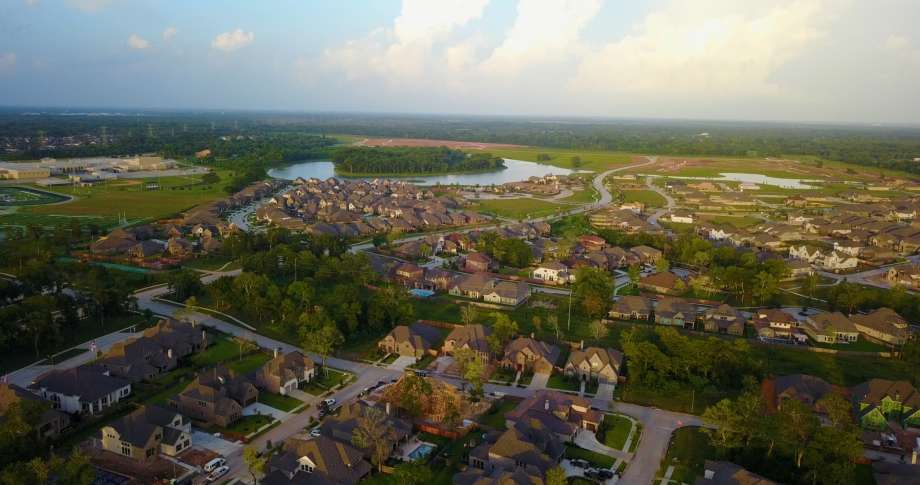
The team at Magnolia Property Mangement are experts at HOA management, from accounting to inspections.
Have confidence in us to provide excellent service to every resident. If a customer cannot find their answer online we are always more than happy to help!
Residents and board members can always access their accounts online or call our office. We always return calls within 24 hours.
Magnolia Property Management has been in business since 1999, with the emphasis being enhanced communications between the Board and the property owners.
Feel free to reach us at 281-599-0098 or email us directly!